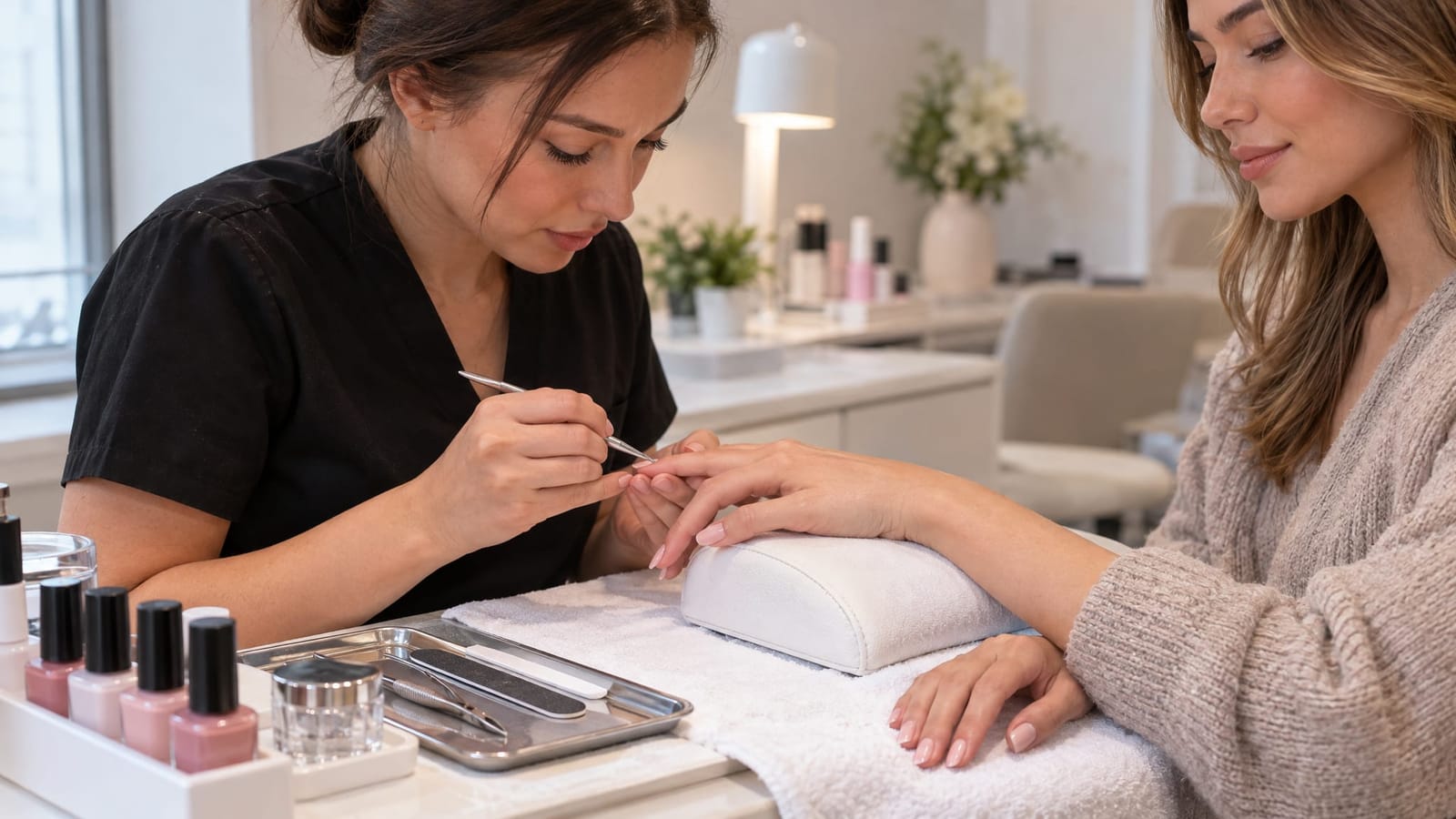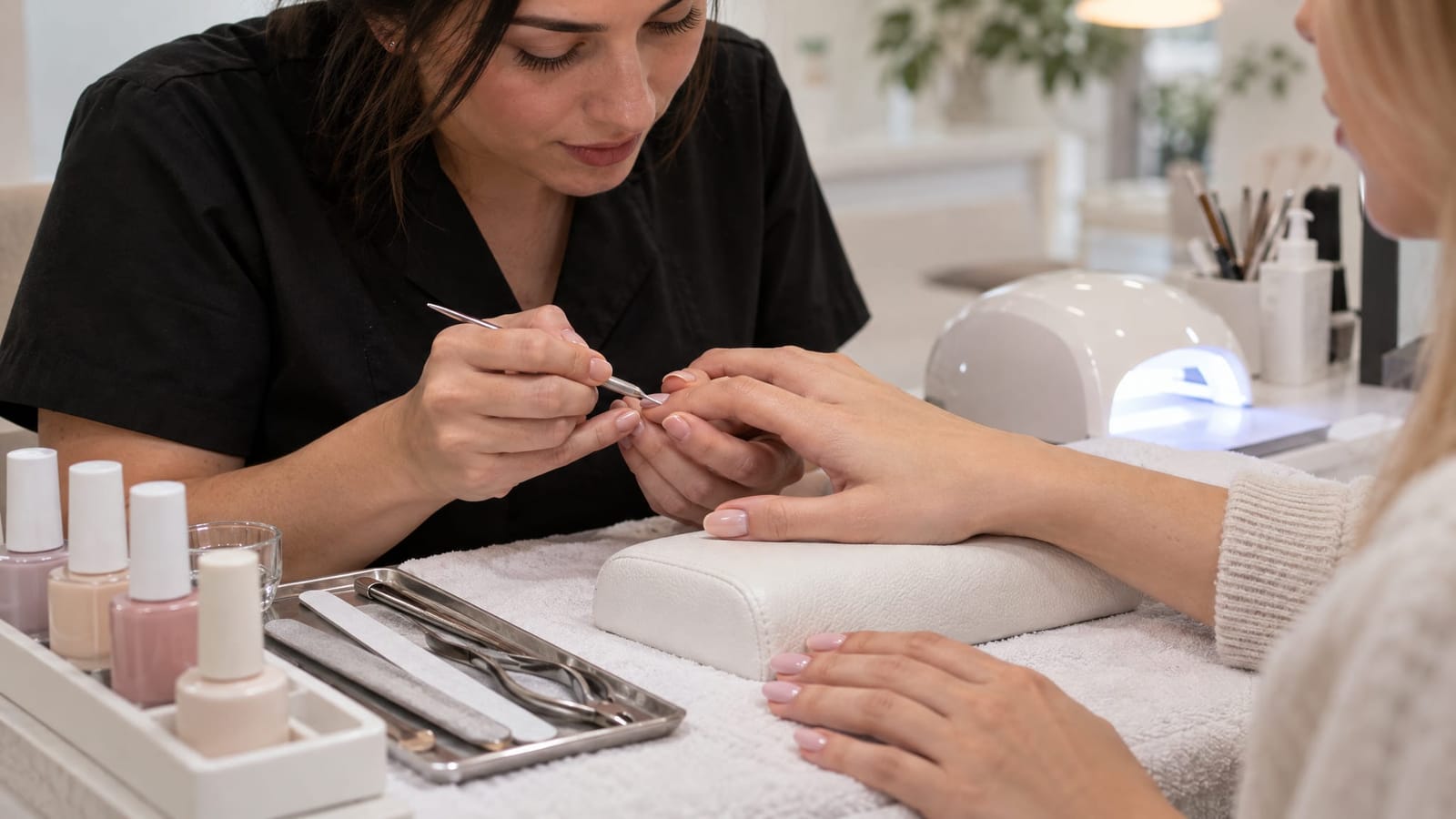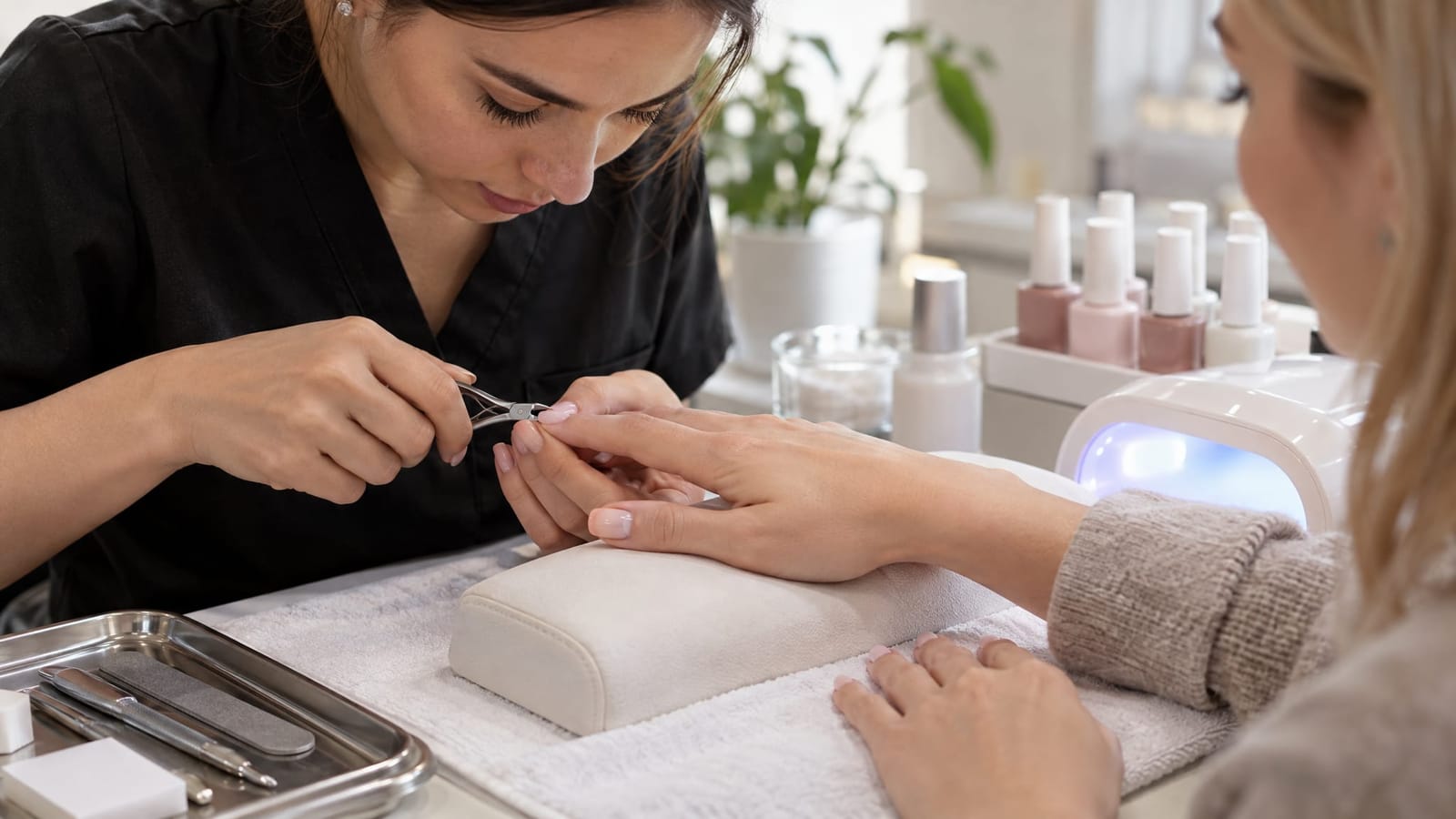



Is Russian Manicure Safe for Thin or Damaged Nails?
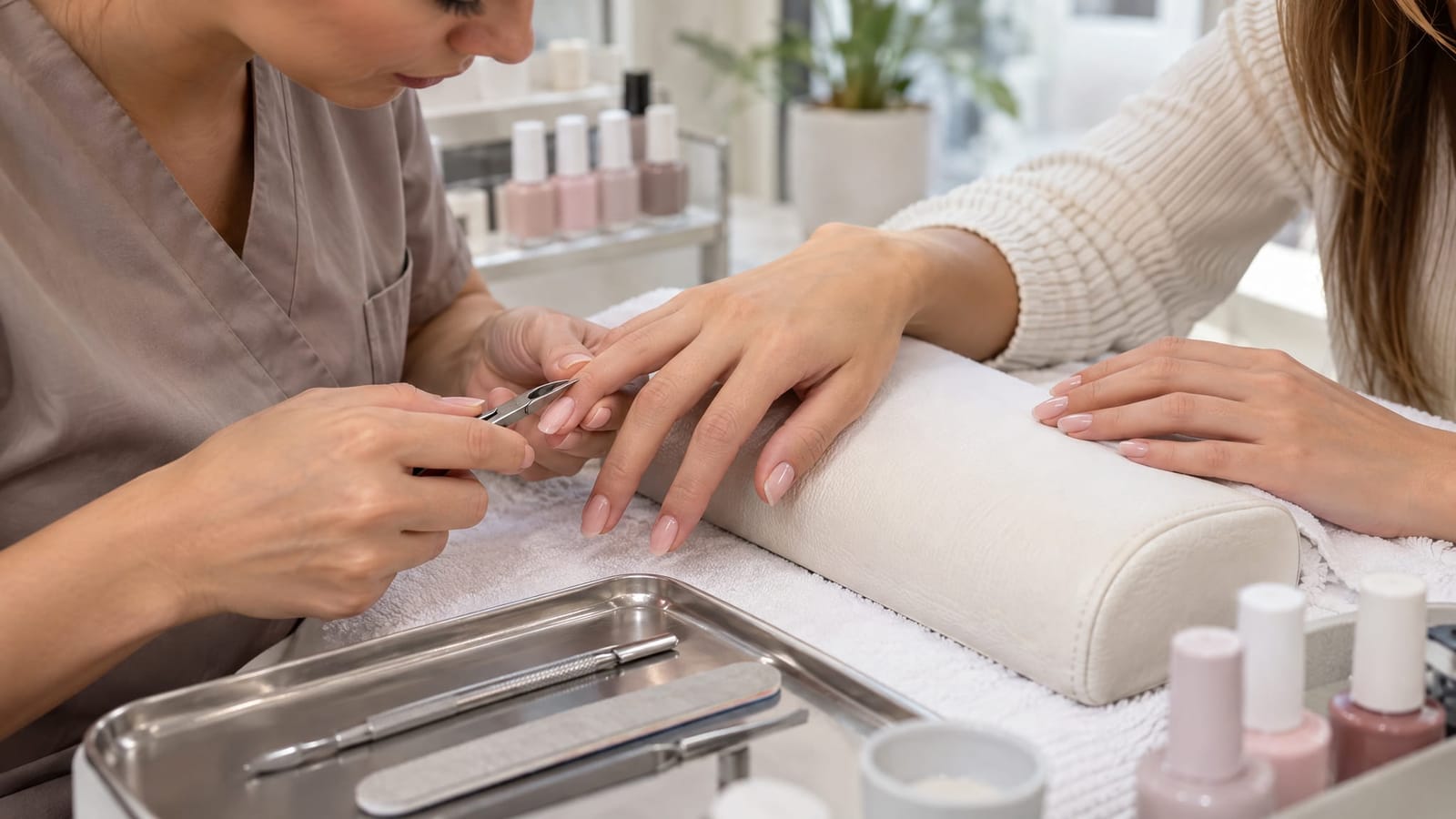
A modified Russian manicure may suit naturally thin nails, but it is not automatically appropriate for nails that are painful, irritated, or damaged. Safety depends on the condition of the nails and surrounding skin, how much preparation is involved, and the technician’s ability to adapt or decline parts of the service.
The goal is not to make delicate nails tolerate a standard routine. It is to choose a level of preparation, length, and finish that respects their condition. A precise, beautiful manicure does not require aggressive cuticle removal or extensive buffing.
What makes a Russian manicure different?
A Russian manicure is a dry preparation technique that typically uses an electric file and specialized attachments for detailed work around the nail and cuticle area. It describes the preparation method, not the coating applied afterward.
That distinction matters for thin nails. Gel polish adds color, while hard gel adds structure. Neither changes the need for careful preparation underneath.
An electric file is not automatically damaging, but it is not automatically gentle either. Pressure, attachment selection, placement, and repeated contact all matter. Excessive filing can remove natural nail material, while aggressive work around the cuticle can injure protective skin. A refined finish never depends on removing living skin.
When a modified service may be an option
Naturally flexible nails are different from nails that have recently become thinner after picking, peeling off product, or excessive filing. Describing what has changed is more useful than simply saying, “My nails are weak.”
A conservative cosmetic service may be an option when nails are comfortable and the surrounding skin is intact. The discussion can focus on:
- Length: A shorter free edge creates less leverage during everyday activities.
- Preparation: Surface work can be limited rather than automatically repeating every step.
- Finish: No polish, regular polish, gel polish, and hard gel involve different preparation and removal needs.
- Maintenance: A finish is only practical if its upkeep fits your routine.
For example, someone with naturally flexible nails who prefers a short, understated look has different needs from someone whose nails became tender after removing extensions. Those situations do not call for the same service plan.
When it is better to postpone cosmetic work
Pain, swelling, broken or bleeding skin, drainage, or separation of the nail from the nail bed are reasons to pause a cosmetic service rather than cover the area with product. Persistent or unexplained changes in nail color or texture also deserve attention beyond a manicure.
If these signs are present, a licensed dermatologist is the right professional to assess your individual situation before further cosmetic work. Nail technicians provide cosmetic services, not diagnosis or treatment of nail disorders.
Even without these signs, recent thinning or peeling can make a simpler service more appropriate than detailed e-file preparation or a new enhancement.
How a careful technician adapts the service
Adaptation means changing the service, not merely using a lighter touch while completing every usual step. For delicate nails, that can include:
- Reducing unnecessary surface work. Thin areas do not benefit from being repeatedly buffed to make the whole nail look uniform.
- Limiting cuticle detailing. The desired appearance does not justify aggressive work against the surrounding skin.
- Choosing manageable length and shape. A shorter nail with smooth edges can be easier to maintain than a long enhancement.
- Accounting for existing product. Removal is part of the service plan, especially when nails already feel delicate.
- Changing or stopping an uncomfortable step. Pain or burning is not a sign that preparation is working.
Thin nails are not a reason to experiment with professional e-file procedures at home. They are a reason for greater restraint during preparation. Our explanation of whether a Russian manicure hurts covers comfort expectations in more detail.
Does hard gel strengthen thin nails?
Hard gel provides a rigid overlay that adds structure while it is worn. That can be useful for some flexible nails, but it does not permanently strengthen the natural nail or replace nail material lost through filing.
Think of hard gel as cosmetic support, not a repair treatment. It also brings maintenance and professional removal requirements. Adding more product is not automatically the right response to tenderness, peeling, or an irritated nail area.
The decision is a tradeoff: added structure may support a desired shape, but it also commits you to an enhancement routine. Gel polish offers color without the same structural role. A no-polish manicure avoids a coating altogether, although preparation still needs to be gentle.
What to discuss at your TK Nails consultation
At TK Nails in Westwood Village, Los Angeles, our licensed technicians specialize in Russian manicures. We also offer hard gel, gel polish, regular polish, and no-polish manicures. For us, luxury nail care means precise detail, cleanliness, and thoughtful service selection, not more intensive preparation for its own sake.
A useful consultation starts with your nail history and preferences. These details help frame the conversation:
- What changed: “My nails have always been flexible,” or “They started peeling after my last removal.”
- What you feel: Any tenderness, sensitivity, or discomfort during previous appointments.
- What is currently on the nails: The existing coating or extension type and how previous product was removed.
- What matters most: A natural appearance, extra structure, minimal upkeep, or a particular design.
Useful questions include, “Which preparation steps can be reduced?” and “What maintenance would this finish involve?” Long-lasting results matter, but not at the expense of comfort or unnecessary filing.
Frequently asked questions
Is a hand file always safer than an electric file?
No. Either tool can remove too much natural nail when used aggressively. The important considerations are where the tool is used, how much material is removed, and whether the service respects the nail’s condition.
Is a no-polish Russian manicure gentler?
It avoids coating application and later coating removal, but the preparation technique still matters. “No polish” does not make aggressive cuticle work or excessive buffing appropriate.
How long is the wait before another manicure?
There is no single waiting period that makes every damaged nail ready for another service. The type of damage, comfort, surrounding skin, and proposed preparation matter more than a calendar date. Lost nail material is not restored by waiting a few days or covering it with gel.
A refined result starts with restraint
Thin nails call for a tailored decision, not an automatic yes or no to Russian manicures. Sometimes that means modified preparation and a short, elegant finish. Sometimes it means a simpler service or postponing cosmetic work. Precision includes knowing what to leave alone.