


Russian Pedicure for Calluses: Does It Really Work?
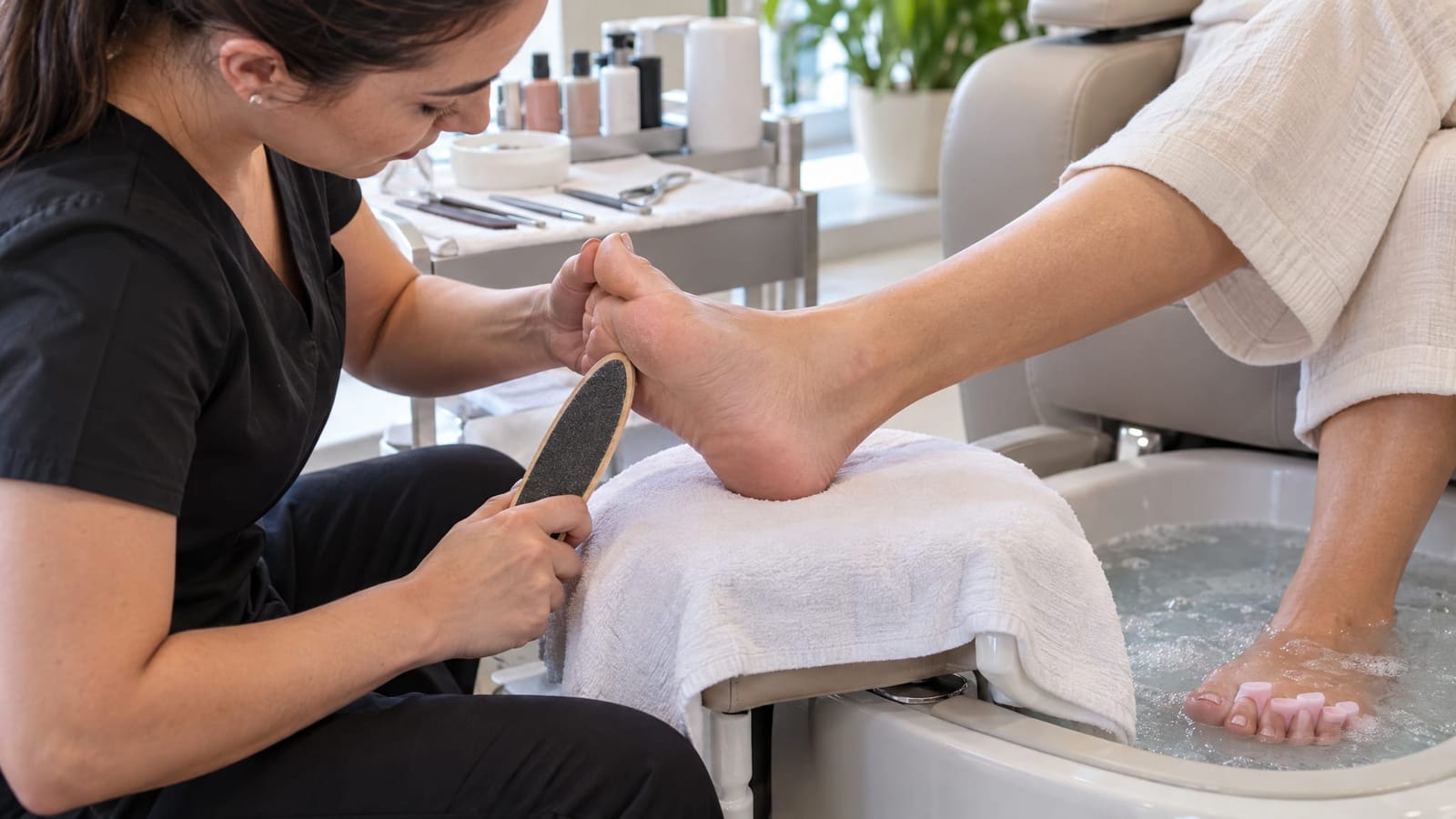
Yes, a Russian pedicure can smooth ordinary surface calluses and refine rough heels. The realistic goal is controlled reduction of excess roughness, not removing every patch of thickened skin. It also does not eliminate the pressure or friction that caused the callus, so maintenance matters.
For Russian pedicure callus removal, the important distinction is between cosmetic smoothing and a foot concern that needs medical attention. Using an everyday example, let’s look at how the technique works, how an e-file differs from a blade, and what a reasonable first-session goal looks like.
Case Focus: Rough Heels After Long Days Standing
Consider someone who spends much of the day on their feet and notices rough, thickened areas around their heels. The skin is intact, without pain or bleeding. Their goal is smoother-looking feet that feel well cared for, rather than a dramatic removal of skin.
Calluses develop in response to repeated pressure or friction. That makes this question relevant to runners, people who train regularly, and anyone who spends long shifts standing or walking.
Activity alone, however, does not determine whether callus reduction is appropriate. The condition of the skin matters more. A superficial rough patch presents a different situation from a painful area or a deep crack.
For this example, the decision is about refining the surface while respecting the skin underneath. Removing more is not automatically a better result.
The Technique Decision: E-File Versus Blade Removal
Russian pedicures are associated with dry, precision-focused work using an electric file, usually called an e-file. Understanding how a Russian pedicure differs from a spa pedicure helps separate the overall service from the specific work involved in smoothing calluses.
An e-file reduces roughness through abrasion
An e-file uses a rotating abrasive attachment to refine the surface gradually. Attachments intended for foot skin serve a different purpose from those used for detailed nail work.
The benefit of this approach is controlled, incremental smoothing. Its limitations still matter: excessive pressure, prolonged work in one area, or an unsuitable attachment can irritate or injure skin. An electric tool is not automatically gentle simply because it works precisely.
A blade cuts away layers of skin
A blade removes tissue by slicing rather than abrading. That is a different action, with a risk of cutting into living skin. Clinical treatment involving sharp instruments is separate from cosmetic salon care.
Blades are not a shortcut to a more luxurious pedicure, and cutting calluses at home carries an injury risk. The comparison is not about which method removes the most skin. It is about whether the concern belongs in a salon and whether the work remains appropriately conservative.
The Safety Check: Skin Condition Comes First
A dry technique does not make a pedicure infection-proof. Clean instruments, appropriate handling, careful technique, and the condition of the skin all matter. Comfortable treatment also matters; pain or burning is not evidence that callus removal is working better.
For diabetes, poor circulation, reduced sensation, painful calluses, bleeding, or broken skin, a licensed podiatrist or other medical clinician is the appropriate professional to assess your individual situation before salon callus work.
At TK Nails in Westwood Village, Los Angeles, we specialize in Russian manicures and pedicures. Our premium approach centers on precision and cleanliness, with licensed technicians and medical-grade sterilization practices. Those standards support thoughtful cosmetic care; they do not turn a pedicure into medical treatment.
For the intact, painless rough heels in our example, the service goal remains surface refinement, not aggressive removal.
Expected Outcome: What One Session Can Accomplish
For a Russian pedicure appointment at TK Nails, a realistic goal is smoother texture, a more refined appearance, and neatly finished toenails. The extent of visible change depends on the starting condition of the skin.
- Light surface roughness: A smoother feel and less visibly dry texture are reasonable expectations.
- Thicker callused areas: Some thickness can remain after appropriate cosmetic smoothing. A completely bare-looking heel is not the standard for success.
- Continued pressure or rubbing: Roughness can return because the underlying daily friction continues.
A polished finish and callus reduction are also separate outcomes. Beautiful toenails do not indicate how much skin has been removed, and long-lasting polish does not mean heels will stay smooth for the same period.
In this case, the useful measure is whether the surface looks and feels more refined without tenderness. A dramatic pile of removed skin is not a meaningful quality measure.
Maintenance: Preserve Smoothness Without Chasing It
Between appointments, routine moisturizing on intact skin and footwear that limits rubbing can support a comfortable foot-care routine. Repeatedly filing the same area to keep it perfectly smooth can become counterproductive.
For athletes, callus care also has to coexist with training. For someone who stands all day, the fit and condition of everyday shoes remain relevant. Neither situation is solved by increasingly aggressive exfoliation.
A useful next step is to notice where roughness returns and which activities or shoes coincide with it. That information helps explain the concern clearly at the next appointment without attempting professional e-file work at home.
Common Questions About Russian Pedicure Callus Care
Can I choose a pedicure without polish?
Yes. We offer no-polish, regular-polish, and gel-polish pedicures. Polish is a finishing preference, not what smooths callused skin. A natural nail finish can still look precise and intentionally groomed.
How often will rough heels need attention?
There is no single schedule that fits every foot. Activity, footwear, skin condition, and the amount of pressure on a particular area influence how quickly roughness returns. Frequent removal is not automatically better maintenance.
What information is useful before the service begins?
Describe where you notice roughness, whether anything feels uncomfortable, and whether you recently used a foot peel or other exfoliating product. Your usual footwear and activity level also provide useful context. Appearance alone does not tell the whole story.
The Takeaway From This Case
A Russian pedicure can work well for cosmetic smoothing of intact, painless calluses. The strongest outcome is not maximum removal, but careful refinement matched to the condition of your feet. Precision, hygiene, and realistic maintenance expectations are what make the service thoughtful self-care.